IOL biometry

IOL biometry

29 July, 2024 0 Like

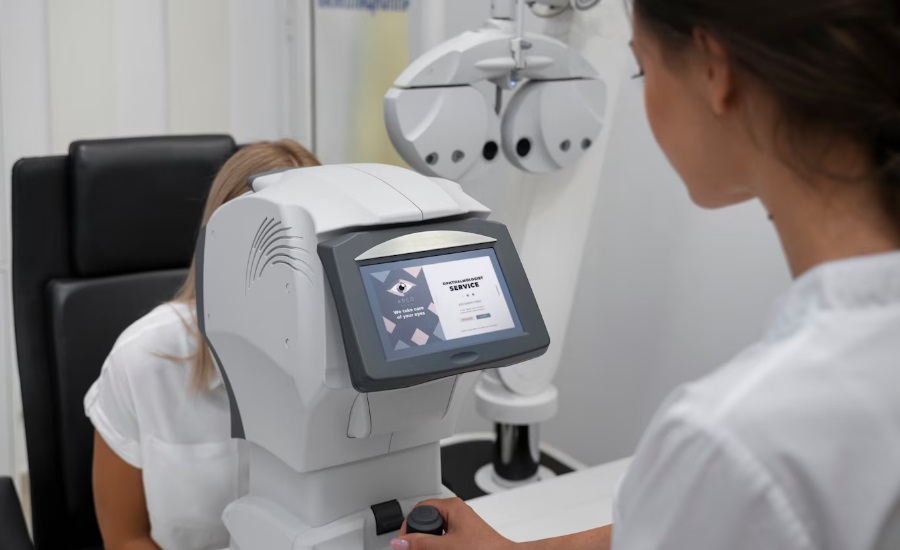
Accurate biometry is essential to achieve optimal visual outcomes and reduce refractive errors post-surgery.


Detail IOL biometry

Key Components of IOL Biometry

Axial Length (AL) Measurement:

  • The distance from the corneal surface to the retinal pigment epithelium.
  • Accurate measurement is critical; even small errors can lead to significant refractive outcomes.
  • Measured using:
    • Optical coherence biometry (e.g., IOLMaster, Lenstar).
    • Ultrasound biometry (A-scan) when optical devices cannot obtain readings.

Keratometry (K):

  • Measures the curvature of the anterior corneal surface.
  • Essential for determining the corneal refractive power.
  • Devices used include:
    • Manual keratometers.
    • Automated keratometers.
    • Topography systems for detailed corneal mapping.

Anterior Chamber Depth (ACD):

  • The distance between the corneal endothelium and the anterior lens capsule.
  • Influences the effective lens position (ELP), which impacts IOL power calculations.

Lens Thickness (LT):

  • Measured with advanced optical biometers.
  • Helps refine calculations, especially for highly myopic or hyperopic eyes.

White-to-White (WTW) Distance:

  • Horizontal corneal diameter.
  • Used in IOL sizing, especially for toric or multifocal IOLs.

Refraction:

  • Preoperative refractive error assessment is vital for IOL calculations.

Other Detail

IOL Calculation Formulas

IOL power calculations rely on biometric data and mathematical formulas. Common formulas include:

  • Older Formulas:
    • SRK II.
    • SRK/T (used for a wide range of axial lengths).
  • Modern Formulas (more accurate for extreme biometric values):
    • Barrett Universal II.
    • Holladay II.
    • Hoffer Q (preferred for shorter eyes).
    • Haigis.
    • Hill-RBF (machine learning-based).

Advanced Biometry Techniques

Optical Low-Coherence Reflectometry (OLCR):

  • Non-contact, precise measurements (e.g., IOLMaster).
  • Measures AL, K, ACD, and more.

Swept-Source Optical Coherence Tomography (SS-OCT):

  • Offers enhanced imaging and biometry of all ocular structures.
  • Examples: IOLMaster 700, Argos.

Ultrasound Biometry:

  • A-scan ultrasound is used when optical methods fail (e.g., dense cataracts).

Special Considerations in IOL Biometry

Post-Refractive Surgery Eyes:

  • Altered corneal curvature makes calculations challenging.
  • Specific formulas (e.g., Shammas, Barrett True-K) or adjustment methods are needed.

Toric IOLs:

  • Require detailed astigmatism analysis.
  • Tools like corneal topography or tomography aid in precise axis measurement.

Pediatric Biometry:

  • Requires special consideration for growth-related changes in eye dimensions.

Sources of Error and Tips for Precision

Errors in Measurement:

  • Ensure consistent alignment during keratometry and AL measurements.
  • Use modern devices to minimize operator dependency.

Corneal Irregularities:

  • Advanced corneal mapping helps identify and account for irregular astigmatism.

Lens Calculation Adjustments:

  • Adjust IOL power based on surgeon-specific outcomes and preferences.