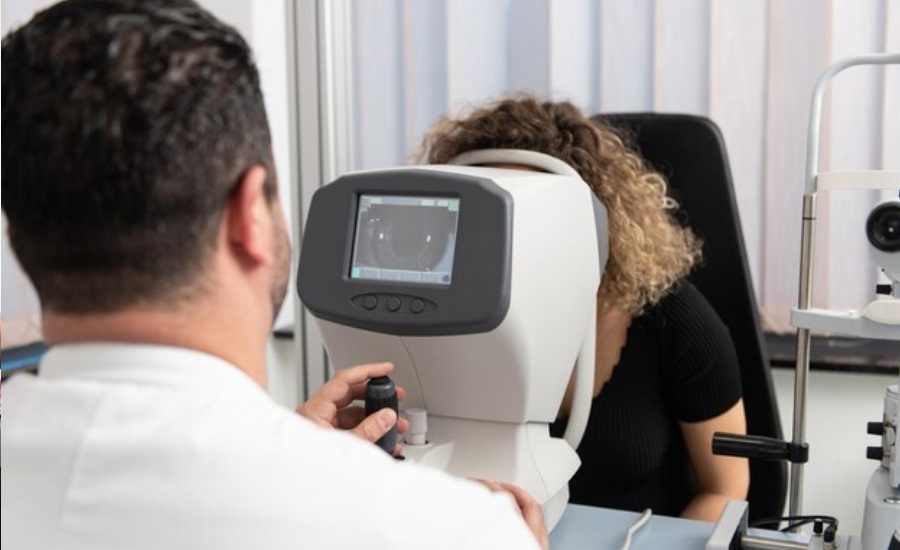
Non contact tonometry

Non contact tonometry

29 July, 2024 0 Like

Non-contact tonometry (NCT), commonly known as air-puff tonometry.


Detail Non contact tonometry

Principle of Non-Contact Tonometry

NCT measures IOP by using a puff of air to flatten (applanate) the cornea temporarily. The resistance of the cornea to this puff of air is used to calculate IOP.

  • A device releases a rapid burst of air toward the cornea.
  • Sensors in the tonometer detect how the cornea deforms in response.
  • The IOP is calculated based on the force required to applanate the cornea.

Procedure

Preparation:

  • The test requires no anesthetic drops, making it convenient and non-invasive.
  • The patient is seated, with their chin and forehead stabilized on the tonometer.

Alignment:

  • The patient looks straight ahead at a target light.
  • The examiner aligns the instrument to the patient’s eye.

Air Puff:

  • A gentle puff of air is directed at the cornea.
  • The tonometer measures the corneal response and displays the IOP reading.

Repeat for Both Eyes:

  • Each eye is tested, usually with multiple readings to ensure accuracy.

Advantages of Non-Contact Tonometry

Non-Invasive:

  • No direct contact with the cornea, reducing the risk of infections.

No Anesthesia Required:

  • Eliminates the need for anesthetic eye drops, increasing patient comfort.

Quick and Convenient:

  • Provides rapid results, making it ideal for routine eye exams and mass screenings.

Wide Applicability:

  • Suitable for all age groups, including children and patients sensitive to contact methods.

Limitations of Non-Contact Tonometry

Less Accurate than Goldmann Applanation:

  • Results can vary due to corneal thickness, biomechanics, or irregularities.

Sensitive to Motion:

  • Movements such as blinking or misalignment can impact the reading.

Corneal Influence:

  • Factors like central corneal thickness (CCT) or rigidity may affect the results, leading to overestimation or underestimation of IOP.

Not Ideal for Certain Conditions:

  • In cases of severe corneal scarring or irregularities, alternative tonometry methods are preferred.

Other Detail

Applications of Non-Contact Tonometry

Screening for Glaucoma:

  • Quickly identifies patients with elevated IOP for further evaluation.

Routine Eye Exams:

  • A standard component of comprehensive eye assessments.

Monitoring Ocular Hypertension:

  • Tracks IOP changes in patients at risk of glaucoma or under treatment.

Factors Affecting NCT Accuracy

Central Corneal Thickness (CCT):

  • Thicker corneas may yield falsely high readings, while thinner corneas may give falsely low readings.

Corneal Biomechanics:

  • Elasticity and stiffness can influence the corneal response to air puff.

Patient Factors:

  • Anxiety, blinking, or difficulty maintaining focus can introduce errors.

Calibration of the Device:

  • Proper maintenance and calibration of the tonometer ensure reliable readings.